
LCIW Release and Discharge Paths
Louisiana DPS&C operates Louisiana Correctional Institute for Women. A person’s departure from LCIW may reflect an institution transfer, a temporary movement, release under diminution rules, parole, or a full-term discharge. Only the actual record can distinguish those outcomes. A transfer to another state institution is continued custody. A P&P assignment shows community supervision, not imprisonment, while a fully completed state term may produce a discharge without ongoing supervision.
The parish jail roster does not control any of these state events. State-sentenced people can be held in more than one Louisiana facility over time, and the current institution may differ from the institution named in an old article or court commitment. Start with the DPS&C number. Then connect the current authority record to the historical discharge facts.
| Question | Correct LCIW source | Limit |
|---|---|---|
| Where is the person now? | DPS&C locator | Current authority, not full history |
| When might release occur? | Projected release date | Estimate if applicable |
| Was parole granted? | Committee record | Decision is not physical release |
| When did discharge occur? | DPS&C public record | Request the actual date and basis |
Verify LCIW Release Status
Louisiana’s official public route begins with the DPS&C offender-information page. The locator telephone is 225-383-4580. Supply a DPS&C number, or the full name and date of birth. The system may identify current placement, the facility address and telephone, a projected release date if calculated, and an assigned P&P district when applicable.
A strong search records the exact result and date checked. Do not promise that a fully discharged person remains visible online.
- Resolve identity with two identifiers, preferably the DPS&C number plus name or date of birth.
- Confirm that the institution is LCIW rather than another state placement or a parish jail.
- Read a projected date only as an estimate. A blank date can mean computation is not finished.
- If supervision is shown, contact the assigned P&P district and ask what public status can be confirmed.
- For past release, request actual admission, discharge, institution, release basis, and supervision information from DPS&C.
LCIW Records and Contact
The current DPS&C directory identifies the facility and general telephone. Use it to verify current operational contacts because old material may reflect pre-flood or interim arrangements. The institution can route a current question, but historical discharge requests belong to DPS&C’s central public-information channel.
Louisiana Correctional Institute for Women
6923 Highway 74
St. Gabriel, LA 70776
Telephone: 225-319-2701
Hours: Confirm through DPS&C
Send a narrow written request to Louisiana Department of Public Safety and Corrections, attention Deputy Secretary’s Office, P.O. Box 94304, Baton Rouge, LA 70804. The documented public-record contacts are 225-342-6744, fax 225-342-3095, and docpublicrecords@la.gov. Identify the person, DPS&C number, court case, approximate dates, and requested fields. Ask for actual discharge date, release basis, institution, and P&P assignment if public.
The release request should not seek protected medical, victim, security, juvenile, or investigative material. Louisiana R.S. 15:574.12 treats many prison records as confidential, while subsection G lists general information that includes the discharge date. If information is withheld, ask for the releasable portion and the legal basis.
Time-computation questions should go to the automated line at 225-342-0799, not the public-record inbox. DPS&C must receive official sentencing paperwork before it can calculate a newly sentenced person’s date. A projected date can later move because of amended court paperwork, corrected jail credit, consecutive or concurrent terms, good-time forfeiture or restoration, another sentence, a detainer, parole action, or a calculation correction. Keep the judgment, state computation, and actual discharge entry separate.
If parole is part of the LCIW record, distinguish statutory eligibility, a posted hearing, the Committee’s action, and physical release. Eligibility permits consideration. A docket gives notice of a proceeding. A grant can include conditions and later processing. Only the later state movement or supervision record shows that release occurred. Request the Parole Decision Form when the docket does not answer the outcome.
Time-computation questions should go to the automated line at 225-342-0799, not the public-record inbox. DPS&C must receive official sentencing paperwork before it can calculate a newly sentenced person’s date. When the locator has no date, call again after the record is updated rather than assuming there will be no release. Keep a dated note of each response, the identifiers supplied, and the exact words used by the system.
LCIW Prerelease Program Record
The official LCIW facility page describes reentry planning that begins at intake and a structured prerelease program.
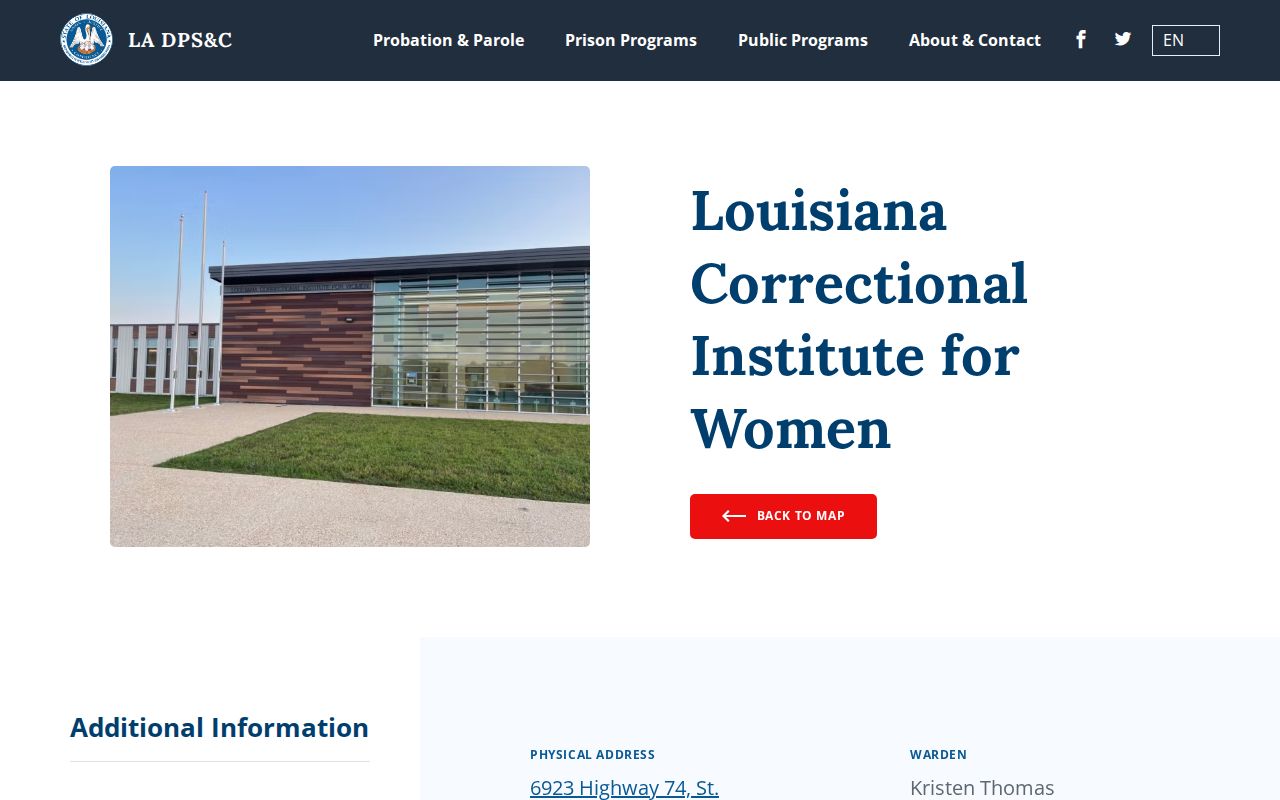
The official source describes 100 hours of structured prerelease programming, with topics that include parenting, anger management, substance-use instruction, and information from community agencies. That is meaningful LCIW-specific context. It is not proof that one person completed the program or was released.
Reentry planning can start long before the final custody event. A course schedule does not establish parole eligibility, a discharge date, transportation, property return, or a community destination. No verified public LCIW gate schedule, family waiting process, weekend release rule, or travel arrangement was found. Confirm any practical departure details directly with the institution at the proper time.
The program description can still help interpret the facility’s work. It shows that preparation begins at intake and that the structured prerelease block is part of a longer corrections process. It does not state that every person receives the same sequence or leaves for the same destination. Avoid attaching a general reentry claim to one person without a person-specific state record. Preparation, eligibility, completion, and discharge remain distinct facts.
Current LCIW Facility Records
LCIW’s population and operating arrangements changed after the 2016 flood and subsequent rebuilding. Current DPS&C material should therefore take priority over archived reports. An older address, custody description, or placement article may be historically accurate yet unsuitable for a present release search. Check the date and source of each claim.
The neighboring Hunt institution also appears in the manifest as facility context. The official Hunt page helps show that two separate DPS&C institutions operate beside one another, but it cannot serve as an LCIW release record.
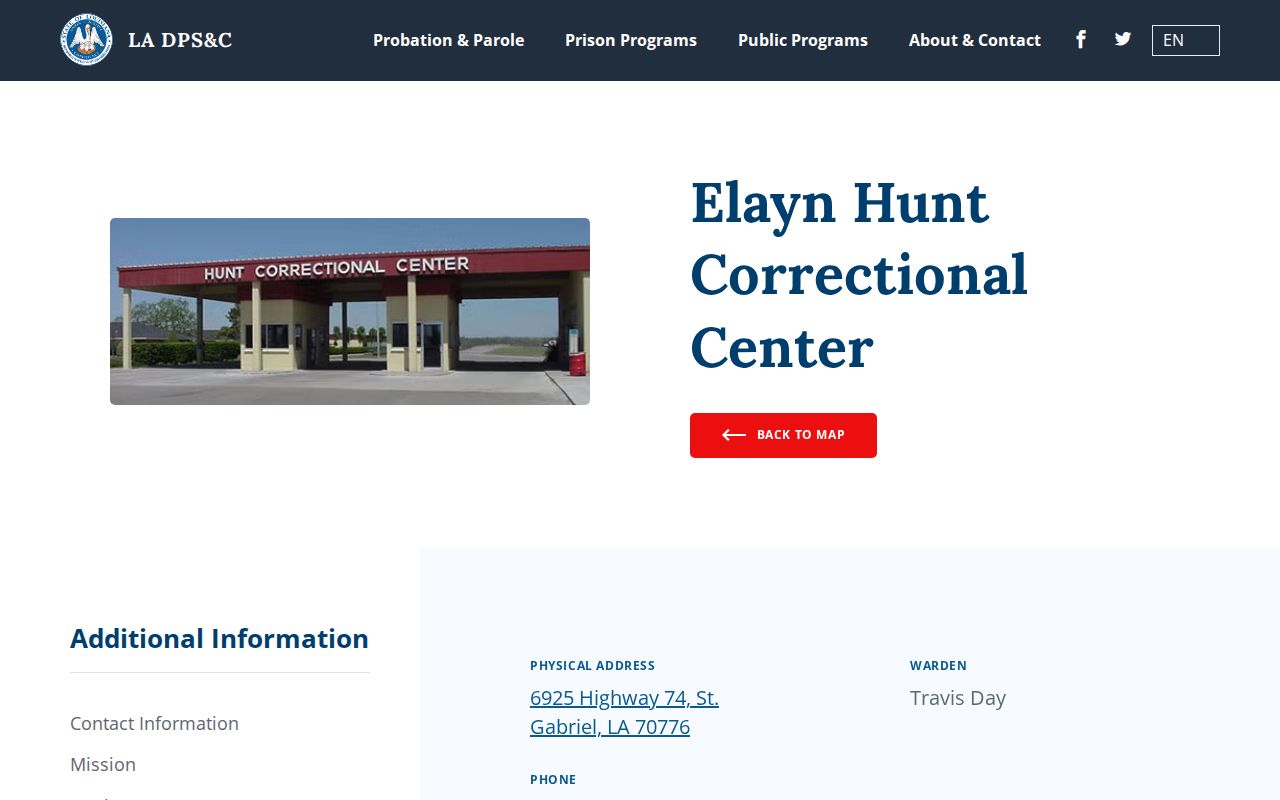
The adjacent addresses make exact institution identification essential. Confirm the LCIW name, DPS&C number, and current authority before contacting a records office. A location match by itself can send a request to the wrong prison.
- Release
- Physical departure under a stated legal basis.
- Transfer
- Movement to another custodian while custody continues.
- Parole
- Conditional community release approved through the parole process.
- Discharge
- The end of the relevant corrections authority recorded by DPS&C.
LCIW State Custody Geography
LCIW and Elayn Hunt stand at adjacent St. Gabriel addresses within Iberville Parish. That creates a local search trap. “In Iberville Parish” does not mean “in Iberville Parish Jail.” The operator and sentence select the custodian. IPSO covers a parish booking. DPS&C covers LCIW imprisonment, time computation, transfer, and discharge.
The DPS&C facility directory is the best route for current institution and P&P office contacts. The assigned supervision office may be outside the parish and need not match the release institution or residence. The locator can identify the district when available, which avoids guessing from the St. Gabriel address.
If a case began with a local arrest, keep both episodes separate. IPSO may document the local booking and a transfer to state authority. DPS&C then documents state placement and eventual discharge. Court minutes explain the sentence but may precede the physical handoff. This three-record chain preserves the meaning of each event.
Louisiana’s notification channels form another separate lane. VINELink or LAVNS may report a custody or supervision event from a participating source, while DPS&C Victim Services offers formal registration for qualifying people. Neither alert replaces the master discharge record. Read the source agency and update time, then verify the event with DPS&C. For a scheduled parole matter, use the docket as notice of a hearing and obtain the official decision before checking later custody.
When supervision applies, the release institution and assigned district can be in different places. DPS&C’s West Baton Rouge District serves Iberville and neighboring areas, but the locator should identify the person’s actual assignment when available. A P&P match means community supervision, not continued confinement at LCIW. A missing supervision result also does not establish full discharge without the state record.
R.S. 15:574.12 gives the historical request added value because subsection G identifies general information that includes the discharge date. By contrast, its photograph provision does not create the same clear public entitlement to a prison photograph. If an image is requested, ask DPS&C for a releasable copy and request the legal reason if it is withheld. Keep the stronger discharge-date claim separate from the narrower photo question.
For broader release verification across all Iberville systems, use the Iberville Parish released inmates search. LCIW-specific facts should still come from the state sources named here.